How to Bypass GPTZero Without Losing Your Voice

How to Bypass GPTZero Without Losing Your Voice
With GPTZero’s detection accuracy now nearing 99%, anyone using AI-powered writing tools needs smarter strategies. Creators and researchers alike increasingly ask how to bypass GPTZero while keeping their originality intact. Fortunately, new approaches are proving effective, when used well.
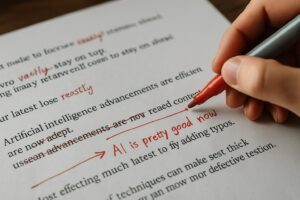
GPTZero’s latest updates make it much harder to fly under the radar using basic tricks like paraphrasing or adding typos. But by understanding how GPTZero works, and how to outsmart it, writers can preserve their voice without setting off red flags.
Why GPTZero Is So Hard to Beat
GPTZero uses a sophisticated blend of metrics to detect AI-generated content. Its primary tools include perplexity (how predictable a sentence is), burstiness (variation in sentence length and structure), and contextual consistency. By layering these models, it catches both raw AI output and human-edited versions with impressive precision.
As of early 2025, GPTZero can identify even partially AI-generated text. According to Cybernews and GPTZero’s own benchmark reports, its accuracy rates exceed 98% for standard AI output and reach near-zero false positives in academia-focused testing. Traditional evasion tricks, like swapping synonyms or tweaking punctuation, have fallen flat.
Key Trend: Humanization Over Automation
Let’s face it, using AI to write content is efficient, but sending it through untouched is no longer a safe bet. That’s why the focus is shifting toward humanizing tools and techniques. Services now offer features to increase burstiness and perplexity, and they attempt to add a more organic flow to AI-generated prose.
However, automated “humanizers” alone aren’t enough. The most effective results come from combining them with hands-on editing. Fixing robotic transitions, varying sentence length, and inserting your own insights go a long way in keeping your writing authentic.
Advanced Strategies to Bypass GPTZero
Here’s where smarter tactics come into play. Rewrite sentences to introduce casual variety. For example, rather than sticking to textbook phrasing, go for something unexpected that reflects how you’d naturally speak or write.
Mix up sentence length and structure. Alternate between short bursts and longer, more complex thoughts. This adds burstiness and throws off detection patterns.
Also, don’t be afraid to add personal stories or commentary. GPTZero can’t replicate individual experience or opinion, and doing so raises the “human signal” in your content. Finally, avoid over-styling your prose, the more genuine it feels, the less predictable it becomes.
Tools Can Help, But Human Oversight Is Key
Several tools claim to help bypass GPTZero with minimal effort. While they’re improving, they still need human intervention to truly work. For example, a human editor can refine the text by injecting original phrasing, referencing real-life experiences, or subtly shifting tone to mirror a consistent personality.
By contrast, overreliance on tools alone often leaves traces GPTZero can pick up. Remember, the algorithm doesn’t just focus on word choice, it analyzes structure, rhythm, and overall coherence.
How to Use Advanced Tactics to Bypass GPTZero
According to iLovePhD and HumanizeAI.now, the newest approaches combine both science and creativity. Increase your writing’s perplexity by asking deeper, open-ended questions and making unexpected narrative choices. Vary your tone between conversational and serious, and switch between first-person and third-person perspectives where appropriate.
Also, resist the urge to make every sentence smooth. Real writing has occasional hiccups, and that’s OK. In fact, strategic imperfection can make your writing seem more real to both readers and detection tools.
Expert Insights
“As of January 2025, GPTZero has enhanced its detection capabilities to identify even partially AI-generated content,” notes HumanizeAI.now.
The GPTZero team emphasizes their commitment to staying ahead: “GPTZero achieves zero false positives on this benchmark, while having the best recall… We ensure that we’re able to remain the most reliable transparency layer in the face of even the most exciting AI advancements.”
Frequently Asked Questions
Can GPTZero detect paraphrased or manually edited AI text?
Yes. GPTZero’s latest models are capable of detecting most paraphrased or lightly edited AI-generated content. Detection rates currently range from 85% to 92% for simple edits. More elaborate rewrites that include personal anecdotes and sentence restructuring remain more difficult to flag.
What is the most reliable way to pass GPTZero without sacrificing writing quality?
The most effective method is a hybrid approach: restructure your sentences for greater burstiness and unpredictability, expand perplexity with nuanced phrasing, and inject personal insight. While tools can assist, nothing beats careful, creative human revision.
Wrap-Up
For more on how AI detection affects rankings, read our deep dive into AI Content Detection and SEO.
Simple paraphrasing tricks are no longer effective against its advanced detection models.
- Humanization, via tone shifts, personal input, and structural variety, is key.
- The best strategy blends AI-assisted tools and thoughtful human editing for authenticity.
Sources and Further Reading